Baptistery of Parma

Covers Parma's churches, museums and walks, with tickets and hours checked against the official pages on the date shown.
UpdatedThis page carries dated prices or seasonal dates checked on the date above, and that window has now passed. Re-check the sources at the foot of the page before you book anything.
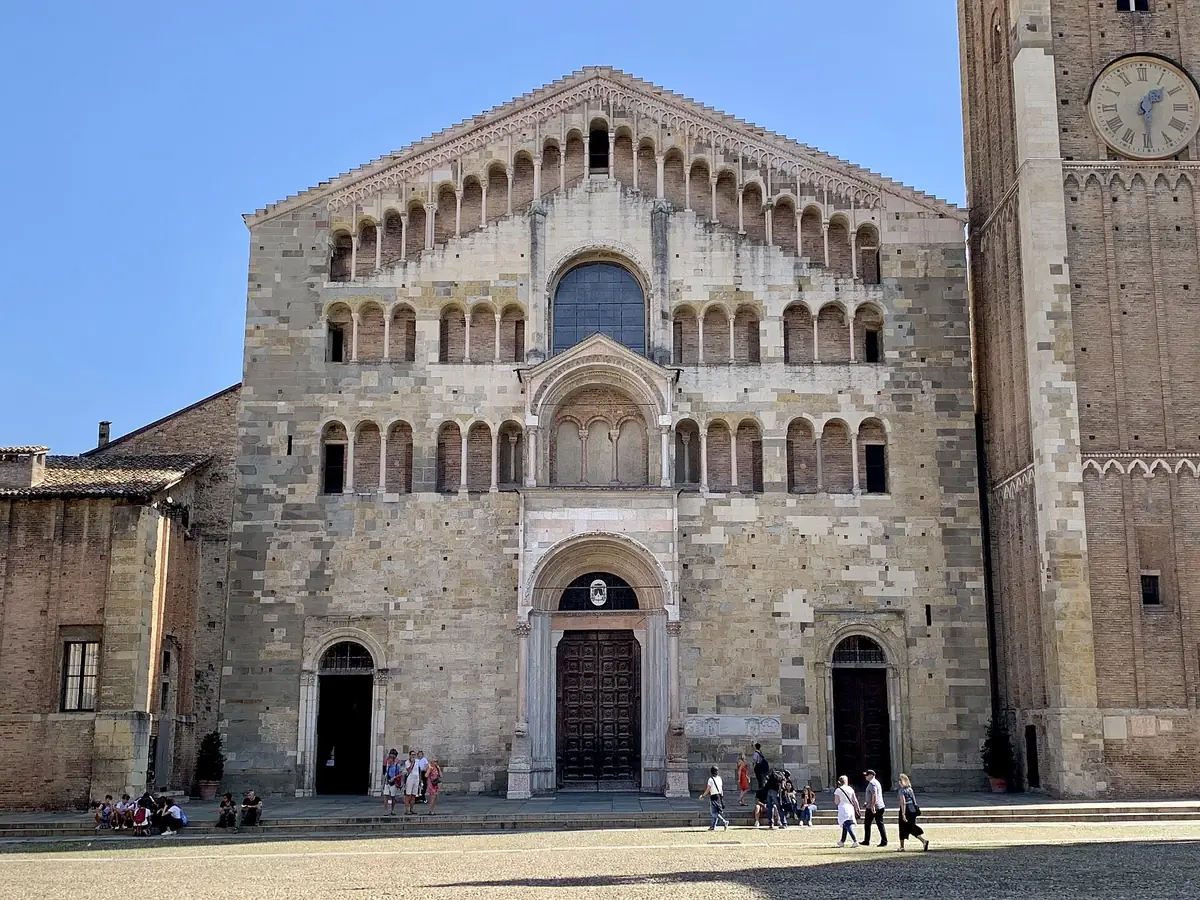
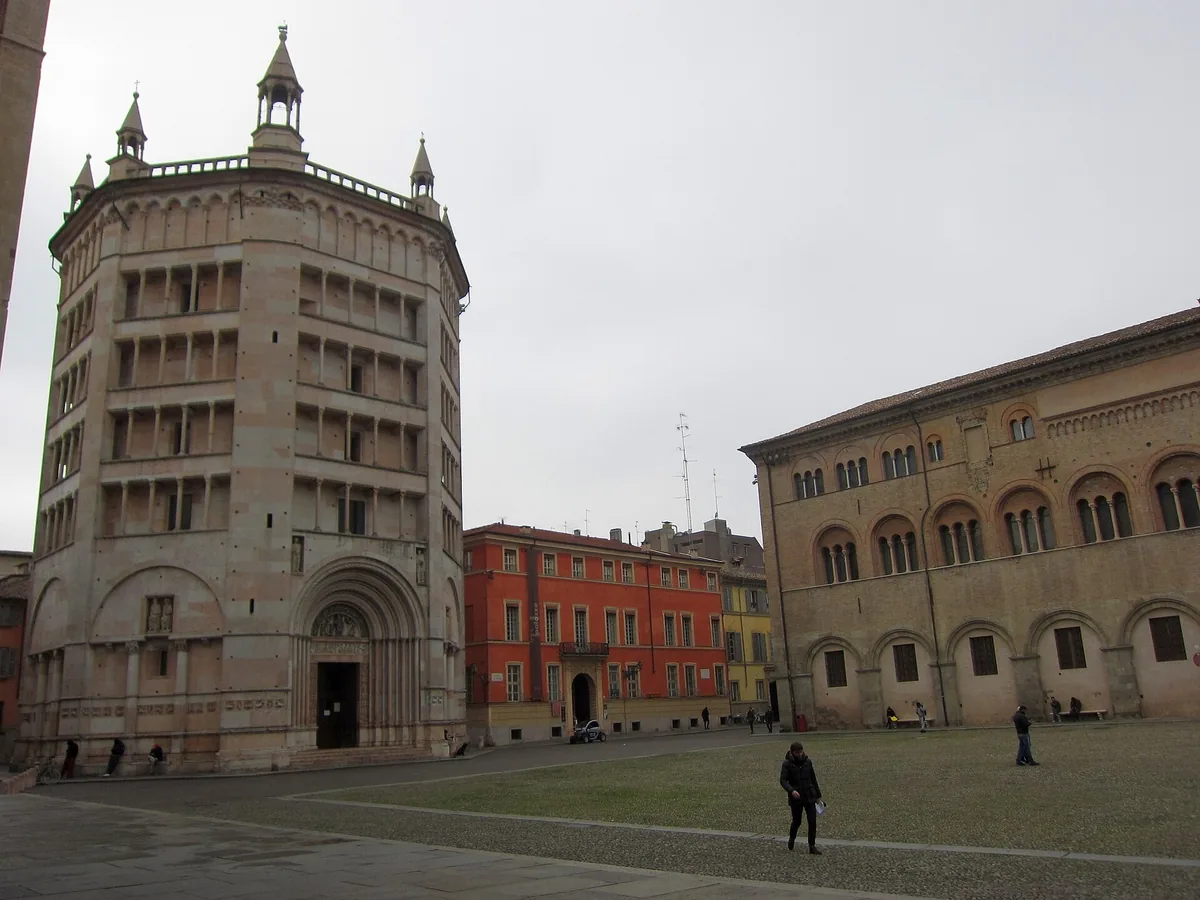
The Baptistery is the pink octagon beside the cathedral. Benedetto Antelami designed it and building ran from 1196 to 1216, in pink Verona marble, with four tiers of open galleries. Unlike the cathedral, it is not free. The Fabbriceria that runs the square sells a combined permit: €12 (reduced €10 for students, over-65s and teachers) for the Baptistery and the Diocesan Museum, valid for two days. Children under 13 go in free, and a family permit for two adults and children under 18 costs €25. Prices are from the official page, last updated August 18, 2026.
Both the Baptistery and the museum open every day from 10 a.m. to 6 p.m., with last entry 15 minutes before closing. Visits stop during services. You buy the permit at the information office at the museum entrance, Vicolo del Vescovado 3/a, a few steps from the Baptistery door, or online. The two-day validity is useful: do the Baptistery on arrival and keep the museum for a quiet morning.
At a glance
- Admission
- €12 full, €10 reduced (students, over-65s, teachers). Family permit €25 for 2 adults and children under 18. Under-13s free.
- What the ticket covers
- The Baptistery and the Diocesan Museum, on one permit valid for 2 days. The cathedral is free.
- Hours
- Open every day, 10 a.m. to 6 p.m. Last entry 15 minutes before closing. Visits pause during baptisms and other services.
- Where to buy
- Information office at the Diocesan Museum entrance, Vicolo del Vescovado 3/a, or online via the Piazza Duomo site.
- Time needed
- 30 to 40 minutes inside the Baptistery; 30 to 45 minutes for the Diocesan Museum.
- Getting there
- On Piazza Duomo, about 170 m from the cathedral door. Roughly 15 minutes on foot from Parma station.
In this guide
Start outside: three doors and a frieze of monsters
Walk around the building before you go in. It costs nothing and takes ten minutes.
- The Portal of the Virgin faces the square, on the north side. The lunette shows the crowned Virgin and Child. The door jambs carry two family trees of the Messiah, and the lintel is inscribed with the name of the sculptor Benedictus and the start date, 1196.
- The Portal of the Redeemer, on the west, is the main door: the works of mercy and the six ages of man on the jambs, and angels waking the dead for judgment on the lintel.
- The Portal of the Baptist, used by those preparing for baptism, has the strangest lunette: a young man in a tree eating honey while a dragon waits below and two mice gnaw the roots. It is the tale of Barlaam and Josaphat, an allegory of life ignoring death.
Around the base runs the zooforo, a band of 75 carved panels attributed to Antelami and his workshop: sirens, centaurs, griffins, unicorns, sea monsters. Four more panels show the virtues that the cathedral's guide calls the key to reading the rest.
Inside: the painted umbrella dome
The reason to pay is overhead. The dome was frescoed in the 1230s by painters from the Po valley working from Byzantine models. It is an umbrella vault: sixteen ribs fan out from the keystone and divide the painting into segments, stacked in six rings. Read it from the bottom up:
- Scenes from the life of Abraham.
- The life of John the Baptist.
- Christ in glory with the Virgin and the Baptist, among prophets and kings.
- The apostles and evangelists.
- The heavenly Jerusalem with its walls.
- The sky with fixed stars, and at the top the Empyrean, painted red.
Around the walls are sixteen deep niches with votive frescoes from the 14th and 15th centuries, by painters such as Niccolo da Reggio and Bertolino da Piacenza. In the middle is the large octagonal font for baptism by immersion, with a smaller quatrefoil basin inside it where the celebrant stood. A second font in the southwest niche, used from the 14th century, stands on a crouching lion.
The Months and Seasons: now at eye level
Antelami's workshop carved a cycle of the twelve months and two seasons, each month shown as the work that defines it: pruning, sowing, harvesting, pressing grapes. The figures are elegant even while they labor, which the Baptistery's guide reads as an allegory of work redeemed. The cycle was never finished, and you can still see tool marks.
For centuries they sat up in the first gallery, too high to see well. The Fabbriceria's ticket page now says the cycle has been moved from the first gallery down to visitor height, so with the permit you can look at them close up. This is the single best argument for the €12. Budget ten minutes here and walk the whole row.
The Diocesan Museum: the statues that came off the Baptistery
The same permit covers the Museo Diocesano Benedetto Antelami, in the basement of the Bishop's Palace on the square. It is small and runs in chronological order from Roman Parma through the early Middle Ages. What makes it worth the stairs:
- The original Antelami statues from the Baptistery's north door: the archangels Michael and Gabriel, King Solomon and the Queen of Sheba, still showing traces of paint, and two prophets. The Michael is a rare reuse of a Roman statue, with only the head and feet recarved.
- The Angiol d'Or, the gilded copper angel, 1.42 m tall, that stood on top of the cathedral bell tower until the last century. A copy is up there now.
- A 6th-century mosaic found in 1955 under the south side of the square, with a cantharus vase, fish and dolphins.
- A stretch of late-Roman city wall from the end of the 3rd century.
How to fit it in
The Baptistery and museum close at 6 p.m.; the free cathedral stays open until 7:20 p.m. On a short afternoon, do the Baptistery first. The Fabbriceria does not publish crowd data or a timed-entry limit, and individual visitors do not need to book a slot.
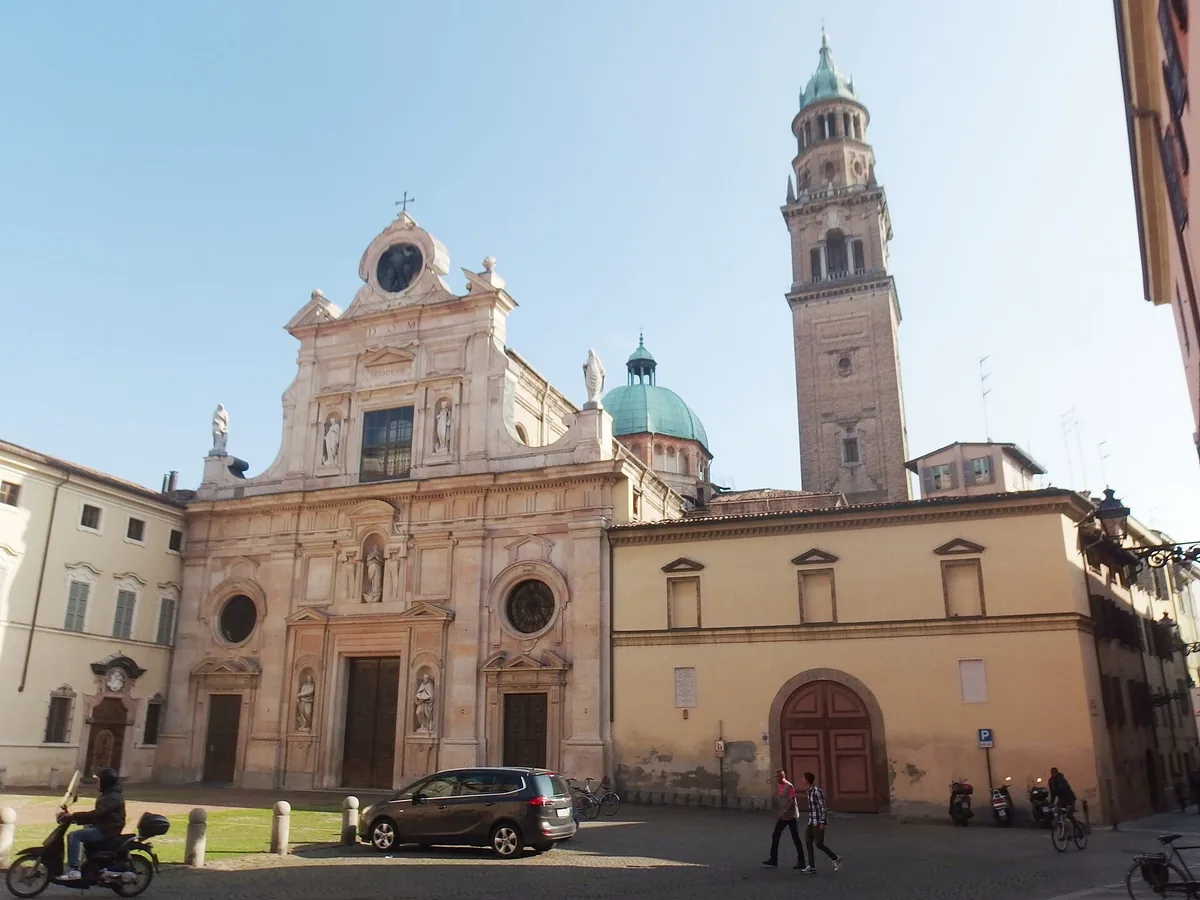
The Baptistery is still a working baptistery, and visits are suspended during ceremonies. If you arrive during one, go to the museum and come back. For a full morning on the square, pair it with San Giovanni Evangelista, directly behind the cathedral. Our historic centre loop starts here.
Frequently asked questions
How much does the Parma Baptistery cost?
€12 full price, €10 reduced for students, over-65s and teachers, on a permit that also covers the Diocesan Museum and is valid for two days. A family permit (two adults and children under 18) is €25. Children under 13 are free. Prices checked on the official site on September 29, 2026.
Can you visit the Baptistery without the Diocesan Museum?
The official price list shows only the combined permit for the Baptistery and the Diocesan Museum. We found no Baptistery-only ticket. Entry for worship and during liturgical ceremonies is free.
What are the Baptistery's opening hours?
Every day, 10 a.m. to 6 p.m., with last entry at 5:45 p.m. Visits are suspended during services. On December 25 the whole Piazza Duomo complex closes from 12:30 to 3:30 p.m.
Is the inside of the Baptistery worth it?
Yes. The 13th-century painted dome, the niches of votive frescoes and the Months and Seasons sculptures, now at eye level, are the best medieval interior in Parma. The exterior carvings are free to see, but the interior is where the permit pays off.
Who built the Baptistery of Parma?
Benedetto Antelami designed it. Work began in 1196, the date inscribed over the north door with the sculptor's name, and continued to 1216. It is built of pink Verona marble on an octagonal plan.
Further reading
Official sources
- Piazza Duomo Parma - Hours and visit permits (official) – €12/€10 combined permit, 2-day validity, €25 family, under-13s free, 10 a.m. to 6 p.m. daily, Months moved to visitor height; page modified August 18, 2026; checked September 29, 2026
- Piazza Duomo Parma - Baptistery of San Giovanni Battista (official) – 1196 to 1216, pink Verona marble, portals, 75-panel zooforo, dome in six bands, sixteen niches, fonts, Months cycle; checked September 29, 2026
- Piazza Duomo Parma - Diocesan Museum (official) – Entrance Vicolo del Vescovado 3/a; Antelami statues, Angiol d'Or (1.42 m), 6th-century mosaic found 1955, late-Roman wall; checked September 29, 2026
- Piazza Duomo Parma - FAQ (official) – Free entry for worship and during liturgical ceremonies; why the fee exists; checked September 29, 2026
- OpenStreetMap foot routing (routing.openstreetmap.de) – Station to Baptistery about 1.1 km; Duomo to Baptistery about 170 m; computed September 29, 2026