Buying Parmigiano and prosciutto to take home

Covers restaurants, bars, local dishes and the Food Valley, with menu and visit prices checked on the date shown.
UpdatedThis page carries dated prices or seasonal dates checked on the date above, and that window has now passed. Re-check the sources at the foot of the page before you book anything.
The short answer, from the official sources: if you are flying to the United States, you can bring Parmigiano Reggiano but not Prosciutto di Parma, culatello or salami. Vacuum packing does not change that. If you are flying to Great Britain, you can bring neither: the UK bans cheese, dairy and pork from the EU in personal luggage. Travelers going home to another EU country can pack both.
So for most readers of this site, the shopping list is short: buy Parmigiano, buy it at a dairy, buy it in a big vacuum-packed piece, and eat the hams here. Below are the rules in the governments' own words, where to buy, what it costs per kilo, and how to get it home in good shape.
At a glance
- Flying to the US
- Solid cheese such as Parmigiano is allowed; declare it. Cured hams and salami from Italy, including prosciutto, may not be brought in by travelers, however they are packed (USDA APHIS, page last modified January 13, 2026).
- Flying to Great Britain
- No cheese, milk or dairy and no pork (or beef, lamb, goat, venison) from the EU in personal luggage. Fish, poultry, eggs and honey are allowed (GOV.UK).
- Within the EU
- Meat and dairy for your own consumption travel freely between EU countries, unless a local animal-disease restriction applies (Your Europe).
- Parmigiano at a dairy
- Caseificio Ugolotti, Parma, 1 kg pieces: 12-month €19.90, 24-month €22.90, 36-month €25.90.
- Prosciutto at a dairy shop
- About €33-€37 per kg; culatello about €96-€101 per kg. Eat them in Italy unless you live in the EU.
- Pack it
- Ask for vacuum packing (sottovuoto), keep the receipt and the label, carry a cool bag.
In this guide
United States: cheese yes, ham and salami no
The US Department of Agriculture's Animal and Plant Health Inspection Service (APHIS) sets the rules for travelers. Its pages were last modified on January 13, 2026.
- Cheese: "Solid hard or soft cheeses (as long as the cheese does not contain meat or pour like a liquid such as ricotta or cottage cheese)" may enter from any country. Parmigiano qualifies at any age.
- Cured pork: "Cured hams (prosciutto, Serrano ham, Iberian ham) and salami from areas within France, Germany, Italy and Spain may not be brought into the United States by travelers." They may only enter as commercial shipments with extra certification. That covers Prosciutto di Parma, culatello, coppa and salame di Felino.
- By mail: APHIS says items sent by mail are regulated as commercial, not personal. Posting a ham home from Parma is not a way round the rule.
- Declare everything. APHIS: travelers "must declare all agricultural or wildlife products". It adds that if you declare them, you face no penalty even when an inspector refuses entry. It recommends keeping receipts and original packaging as proof of origin.
The only meat exception is commercially packed, cooked, shelf-stable meat in sealed containers, which is not what a Parma deli sells.
Great Britain: no cheese and no pork from the EU
GOV.UK's guide "Bringing food into Great Britain" lists what you cannot bring from the EU, Switzerland, Norway, Iceland and Liechtenstein, "because of recent and ongoing animal disease outbreaks in the EU":
- "cheese, milk and dairy products like butter and yoghurt"
- pork, beef, lamb, mutton, goat and venison, and "other products made from these meats, for example sausages"
There is no exception for vacuum packs or shop labels. Fish, poultry, eggs and honey are allowed. If you declare banned food, Border Force takes it and destroys it. If you do not, GOV.UK says you could be fined up to £5,000 in England or prosecuted. Northern Ireland has separate rules. In short: if you live in Britain, eat your Parmigiano in Parma.
EU residents, and everyone else
The EU's Your Europe portal says that within the EU "you can carry meat or dairy products with you as long as they are for your own personal consumption", and that the same applies to food you order online or have sent by post. The zone includes Norway, Iceland, Liechtenstein and Switzerland. The warning: local animal-disease outbreaks can bring temporary limits, so check before you fly.
For Canada, Australia and other countries, check your own government's rules before you buy; we have not verified them. Whatever the country, declare food on arrival.
Where to buy: dairy shop or city deli
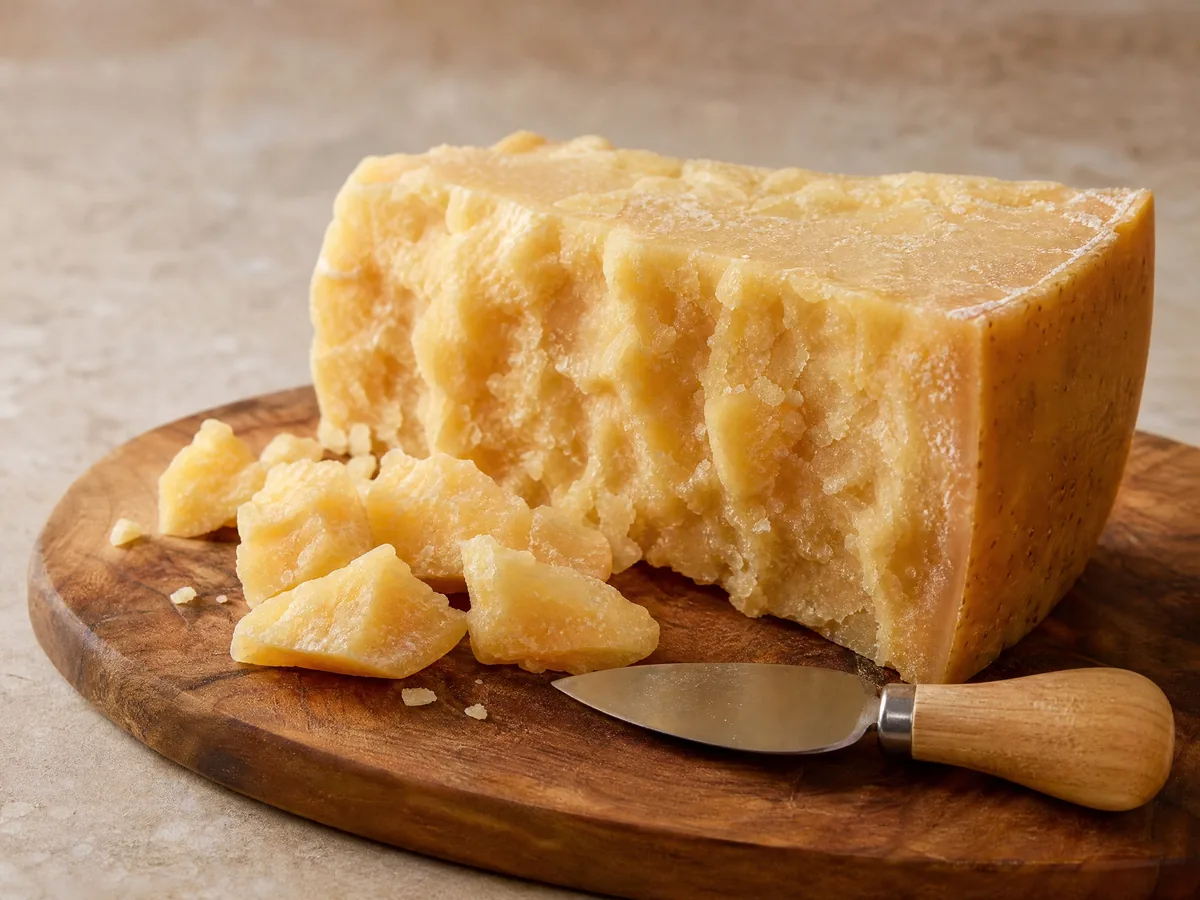
Buy Parmigiano at a dairy. You see where it was made, you can taste ages side by side, and the prices are published. Caseificio Ugolotti, Via Emilio Lepido 72, is inside Parma's city limits, 4.8 km from Piazza Garibaldi, and its shop opens Monday to Saturday, 8 a.m. to 7:30 p.m. (also Sundays in December). Its online prices on September 29, 2026:
| Product | Piece | Price | Per kg |
|---|---|---|---|
| Parmigiano 12 months | 1 kg | €19.90 | €19.90 |
| Parmigiano 24 months | 1 kg | €22.90 | €22.90 |
| Parmigiano 30 months | 1 kg | €23.90 | €23.90 |
| Parmigiano 36 months | 1 kg | €25.90 | €25.90 |
| Parmigiano 12 months | 250 g | €9 | €36 |
| Prosciutto di Parma | 1.6-1.7 kg | €59.50 | about €35-€37 |
| Culatello, half, 18 months minimum | 1.7-1.8 kg | €172 | about €96-€101 |
| Salame di Felino IGP | 500-600 g | €16 | about €27-€32 |
Small pieces cost far more per kilo: the 250 g wedge works out at €36 per kg against €19.90 in a 1 kg piece. Buy the big piece and share it.
City delis around Piazza Garibaldi sell the same products, often sliced to order, but none we could reach publishes a price list, so we give no city figure. Compare per kilo on the label and ask for the age. Most dairy visitors buy at the dairy shop; if you are on a dairy morning, that is the time.
Which Parmigiano to buy, and how to read the label
- Age: the minimum is 12 months. For eating in pieces, our Parmigiano page recommends 24 or 30 months: €22.90 to €23.90 per kg at Ugolotti, a small step up from 12 months. 36 months and older is drier and more crystalline, and dearer.
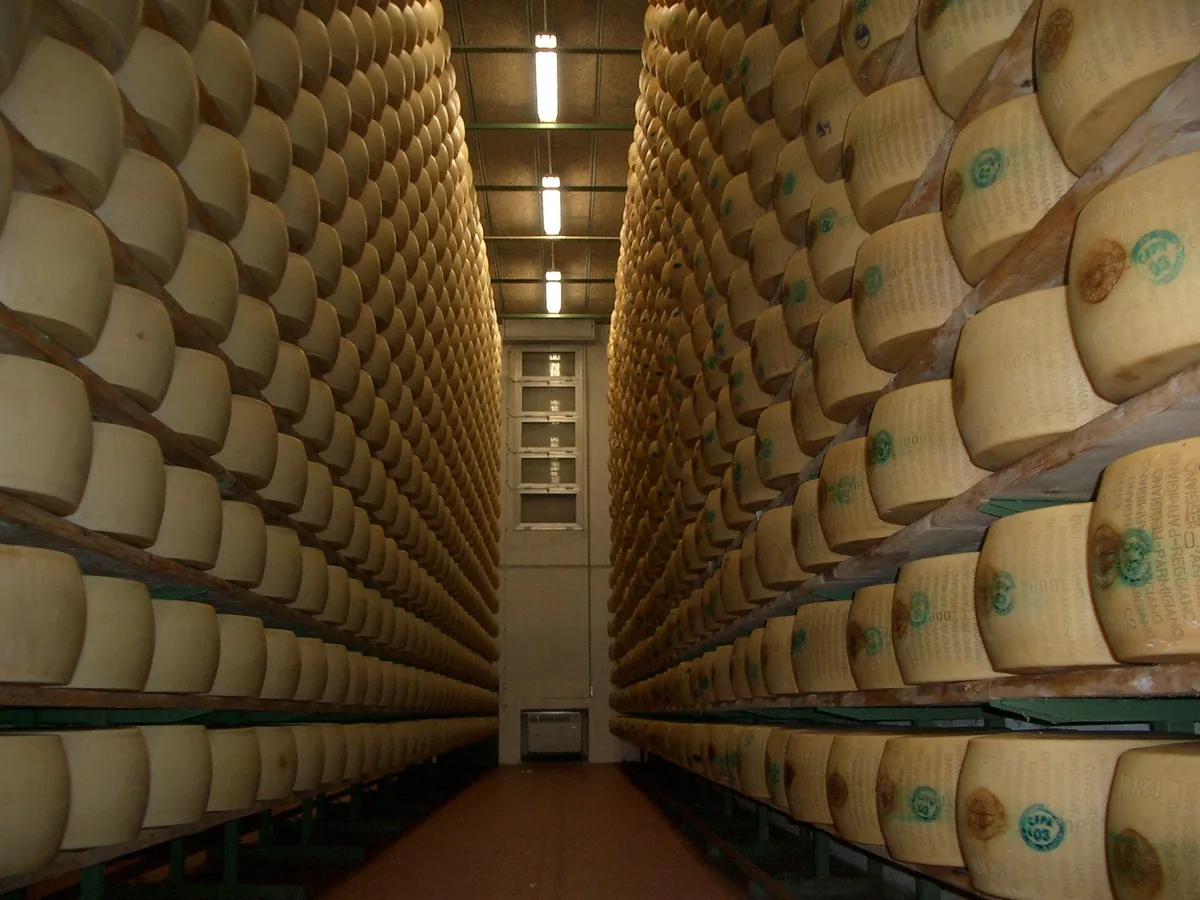
- Label: the Consortium requires pre-packed pieces to state the minimum age. The fire brand goes on the wheel at 12 months, and the dotted Parmigiano Reggiano lettering on the rind is the mark to look for on a cut piece.
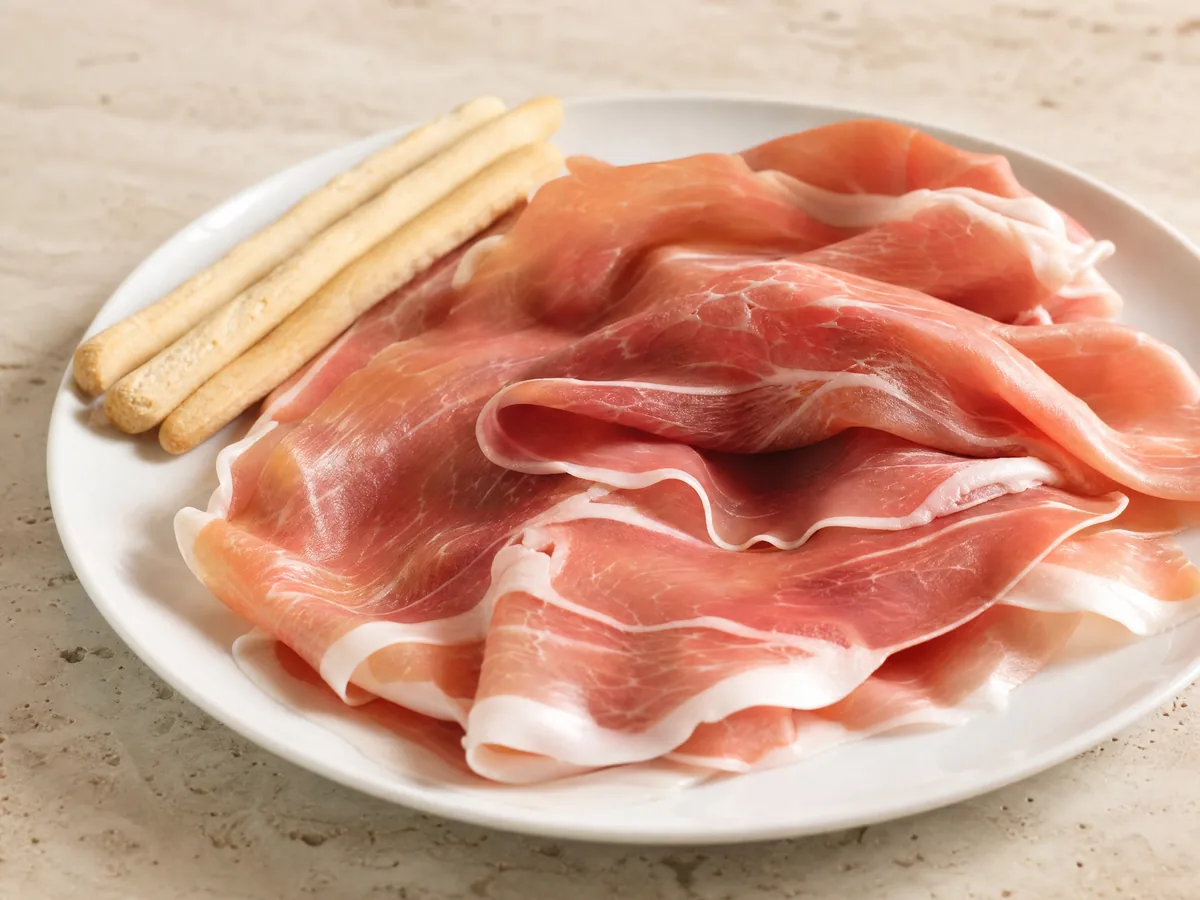
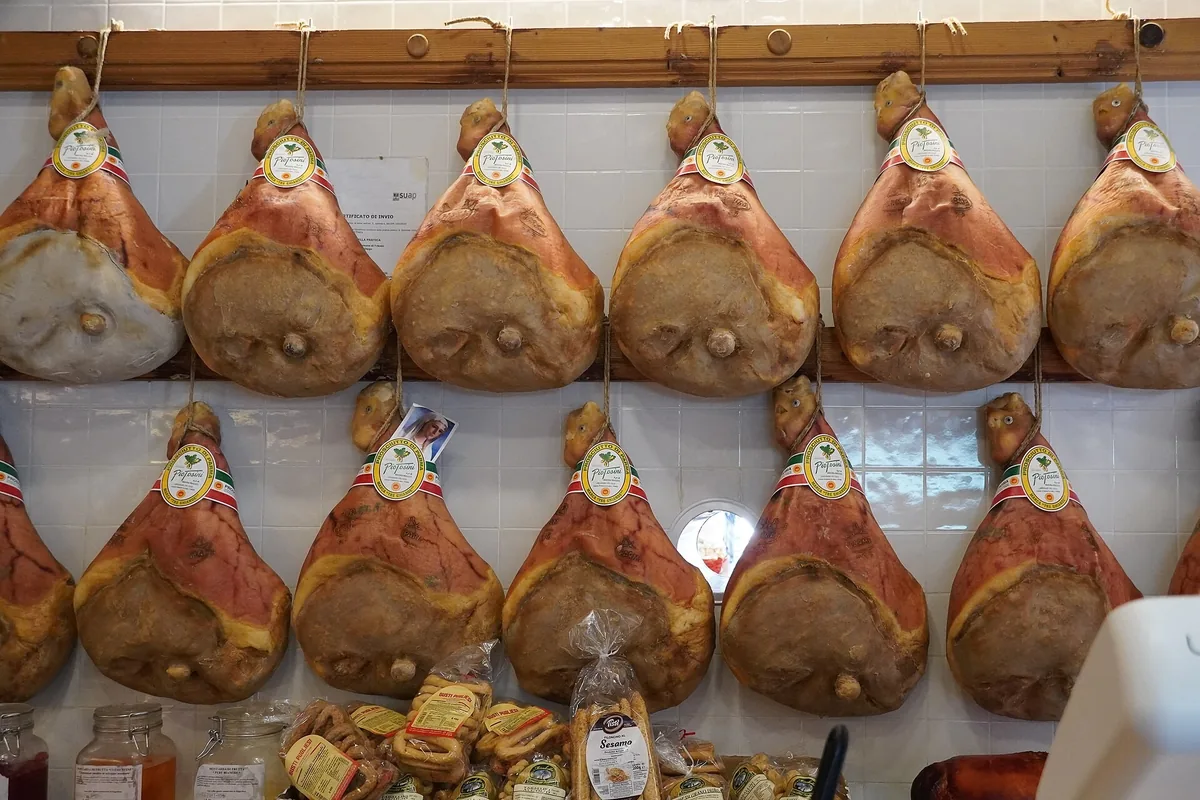
- Prosciutto, for EU travelers: genuine Prosciutto di Parma is pork and sea salt only, aged at least 14 months under the rules in force since May 2025, and carries the ducal crown brand. Pre-sliced packs are sliced inside the production zone.
Vacuum packing and getting it home
- Ask for sottovuoto, vacuum packing. Dairy shops do it as a matter of course. The Consortium puts the shelf life of vacuum-packed Parmigiano at about six months.
- Keep it cool on the day you buy it, especially in a car in summer. Bring a cool bag to the dairy.
- Keep the receipt and the label. APHIS asks for proof of origin; the dairy's receipt and the printed label are exactly that.
- Declare it on arrival in the US. Declared cheese that meets the rules goes home with you.
- Do not hide a pack of prosciutto in the cheese. APHIS and Border Force both treat undeclared banned products as the offense.
At the Festival del Prosciutto or a Caseifici Aperti weekend, the temptation to buy a whole leg is strong. Unless you live in the EU, eat it here: a plate costs €11 at Trattoria del Tribunale.
Tickets and tours you can book
Booking through these links supports this site at no cost to you. Prices move by date, so we do not print them here; the official prices we checked are in the page above.
Frequently asked questions
Can I bring Parmigiano Reggiano back to the US?
Yes. USDA APHIS allows solid hard or soft cheeses that contain no meat and do not pour like a liquid, from any country. Declare it to US Customs and keep the receipt and label.
Can I bring Prosciutto di Parma to the US if it is vacuum-packed?
No. APHIS says cured hams, naming prosciutto, and salami from Italy "may not be brought into the United States by travelers". Packaging makes no difference; only certified commercial shipments may enter. The same applies to culatello and salame di Felino.
Can I bring Parmesan cheese into the UK from Italy?
Not into Great Britain. GOV.UK bans cheese, milk and dairy products, and pork, from the EU in personal luggage. Declared items are destroyed; undeclared ones can bring a fine of up to £5,000 in England. Northern Ireland has separate rules.
How much does Parmigiano cost in Parma?
At Caseificio Ugolotti, on September 29, 2026: €19.90 per kg for 12 months, €22.90 for 24 months and €25.90 for 36 months, in 1 kg pieces. A 250 g piece of 12-month cheese was €9, which is €36 per kg.
How long does vacuum-packed Parmigiano keep?
About six months, according to the Parmigiano Reggiano Consortium. Once opened, treat it like any cheese.
Can I mail prosciutto home from Italy?
Not to the US: APHIS regulates anything sent by mail as commercial, and cured Italian ham needs commercial certification. Within the EU, Your Europe says the personal-consumption rule covers items sent by post.
Further reading
Official sources
- USDA APHIS - Traveling with meats, poultry and seafood (official) – Cured hams (prosciutto) and salami from Italy may not be brought by travelers; mail is commercial; declare all products; last modified January 13, 2026; read September 29, 2026
- USDA APHIS - Traveling with milk, dairy and eggs (official) – Solid hard or soft cheeses without meat allowed from any country; keep receipts and packaging; last modified January 13, 2026
- GOV.UK - Bringing food into Great Britain: meat, dairy, fish and animal products (official) – From the EU: no cheese, milk, dairy, pork, beef, lamb, mutton, goat, venison; read September 29, 2026
- GOV.UK - Bringing food into Great Britain: if you break the rules (official) – Declared banned food destroyed; undeclared: fine up to £5,000 in England or prosecution
- Your Europe - Taking animal products, food or plants with you (European Union) – Meat and dairy for personal consumption allowed within the EU, also by post; local restrictions possible
- Consorzio del Parmigiano Reggiano - FAQ (official) – Minimum 12 months; fire brand; pre-packs state minimum age; vacuum-packed shelf life
- Caseificio Ugolotti - online shop (official) – Prices per piece and shop hours, September 29, 2026
- Consorzio del Prosciutto di Parma - production rules, May 17, 2025 (official PDF) – Minimum 14 months; pork and sea salt; slicing in the production zone