Marie Louise, the Duchess who made Parma

Covers Parma's churches, museums and walks, with tickets and hours checked against the official pages on the date shown.
UpdatedMarie Louise of Austria arrived in Parma as a consolation prize. She had been Napoleon's empress; after his fall the Congress of Vienna gave her the duchies of Parma, Piacenza and Guastalla on June 9, 1815, but only for life, so that no Bonaparte could inherit them. She took the Italian name Maria Luigia, entered the duchy on April 19, 1816, and ruled until her death on December 17, 1847.
Those 31 years shaped the city you walk through. The opera house, the conservatory where Toscanini studied, the bridges on the Via Emilia and the sundials on Piazza Garibaldi date from her reign. Parma still calls her the "buona duchessa", the good duchess. This page sets out what she built, where the legend outruns the record, and where to see her things today.
At a glance
- Born
- December 12, 1791, in Vienna, eldest daughter of Emperor Francis of Austria.
- Duchess
- The Congress of Vienna assigned her Parma, Piacenza and Guastalla on June 9, 1815, for her lifetime only. She entered the duchy on April 19, 1816.
- Marriages
- Napoleon in 1810; Count Adam von Neipperg in 1821 and Count Charles-René de Bombelles in 1834, both morganatic.
- Built
- The Taro bridge (opened October 10, 1819), the Trebbia bridge (1825), the Teatro Regio (1821 to 1829) and the Conservatorio (1821).
- Died
- December 17, 1847, in Parma. Buried in the Imperial Crypt in Vienna, not in Parma.
- See her today
- Museo Glauco Lombardi, Strada Garibaldi 15: €7, Tuesday to Saturday 9:30 a.m. to 4 p.m., Sunday to 7 p.m., closed Monday.
In this guide
From empress of the French to duchess of Parma
Marie Louise was born in Vienna on December 12, 1791. In 1810, aged 18, she was married to Napoleon: by proxy in Vienna on March 11, then in a civil ceremony at Saint-Cloud on April 1. Their son, Napoleon Francis, was born on March 20, 1811 and styled King of Rome.
When Napoleon fell in 1814 she did not follow him to Elba; she went home to her father. At Vienna, Britain, France and Spain resisted giving Parma to a Bonaparte. The compromise was a life tenure: the duchies would return to the Bourbons after her death, and her son was not allowed to come to Italy. He grew up in Vienna and died there in 1832.
She left for Italy on March 7, 1816, with Count Adam von Neipperg at her side. Her first stop was the ducal palace at Colorno, which became her summer residence. You can tour it today: the Reggia di Colorno is 16 minutes from Parma by train, €2.70 each way.
What she built, with dates
Her first major work was practical. The bridge over the Taro, designed by the ducal engineer Antonio Cocconcelli, was begun in 1816 and inaugurated on October 10, 1819, after floods stopped the work more than once. She ordered a second bridge over the Trebbia on May 22, 1819; it opened in June 1825. In a letter of October 1819 she wrote that these bridges and some charitable institutions were the only monuments she wished to leave.
She built more than that. The main works, as recorded by her biographers and by the institutions themselves:
- 1817: a maternity institute and university obstetrics clinic, opened in September.
- 1821: the Conservatorio di Parma, where Arturo Toscanini later studied.
- 1821 to 1829: the new ducal theater, today's Teatro Regio, by the court architect Nicola Bettoli. It opened on May 16, 1829 with Bellini's Zaira, written for the occasion. The premiere was a failure and the opera ran for eight performances.
- 1823: a new crypt for the Farnese dukes in Santa Maria della Steccata.
- 1829: the three sundials on the Palazzo del Governatore, on Piazza Garibaldi.
- In the Pilotta, she arranged a library, an archaeological museum and the picture gallery that became the Galleria Nazionale. The library extension was finished in 1834.
The theater's drop curtain, painted by Giovan Battista Borghesi, shows her at the center as Minerva. Guided tours of the Regio cost €12 and last about 30 minutes.
The good duchess: what the record supports
The nickname has a basis, and a limit. On the credit side, when cholera reached the duchy in June 1836 she visited the sick, and she melted down the silver-gilt toilet set Paris had given her for her wedding to Napoleon, raising 125,000 francs. The epidemic ended that September after 438 deaths, according to her biographers.
On the other side, she did not really govern alone. Policy came from Vienna through ministers the Austrian court sent: first Neipperg, whom she married in secret in 1821, then Baron Josef von Werklein and, from 1833, Charles-René de Bombelles, whom she married, also in secret, on February 17, 1834. In February 1831 crowds in Parma demanded a constitution and Werklein's removal. She left the city on the night of February 14 to 15, Austrian troops restored order, and she returned on August 8. On September 29, 1831 she proclaimed an amnesty rather than trying the leaders.
Her two children with Neipperg, Albertine and William, could not inherit. Albertine married Count Luigi Sanvitale of Fontanellato, which is how many of her belongings reached the museum that now holds them.
The violets
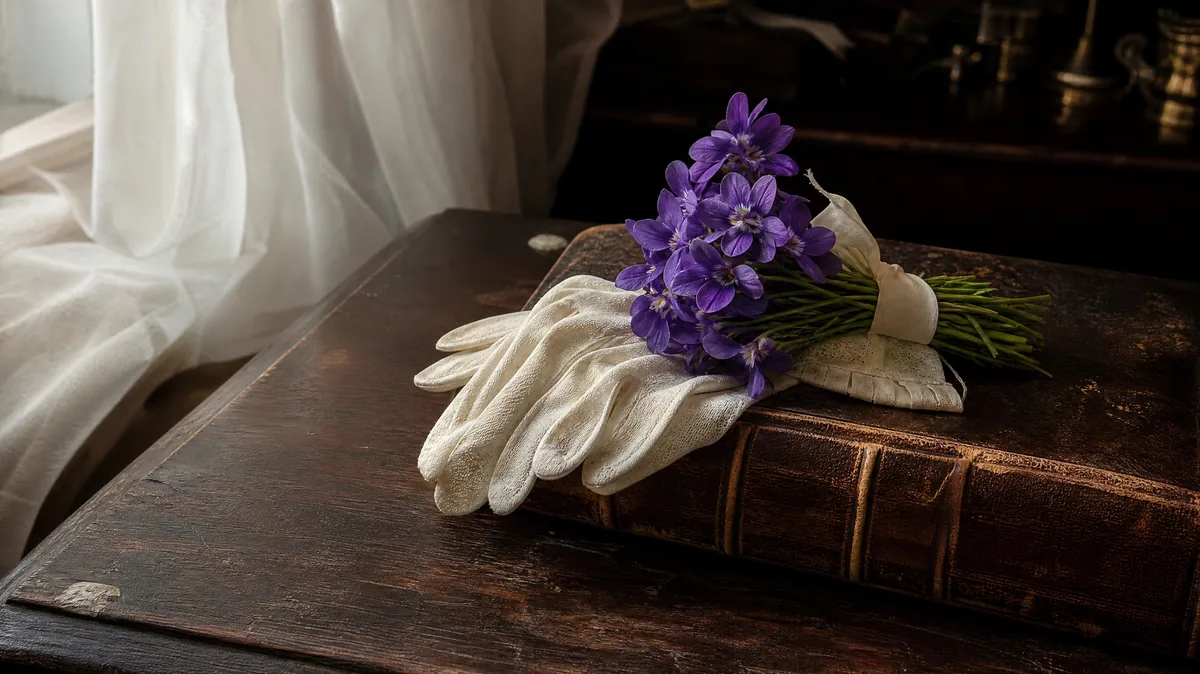
Parma's violet is tied to her in every souvenir shop. What a public source confirms is narrower: the Emilia-Romagna Region's museum register says the Parma perfumer Borsari, founded in 1870 by Lodovico Borsari, created its "Violetta di Parma" scent inspired by Marie Louise. That is 23 years after her death, so the perfume is a tribute, not something she wore.
We could not verify current perfume prices or the hours of the Borsari collection, and we name no shop for candied violets. Our Violetta di Parma page has what we could confirm.
Where to see her in Parma today
| Place | What of hers | Cost |
|---|---|---|
| Museo Glauco Lombardi | Portraits, jewelry, needlework, watercolors and her fortepiano | €7; closed Monday |
| Teatro Regio | The theater she paid for, and Borghesi's curtain | Tour €12 |
| Galleria Nazionale, Pilotta | Canova's statue of her as Concordia | €18 Pilotta ticket, €10 from 5 p.m. |
| Piazza Garibaldi | The 1829 sundials on the Governatore | Free |
| Reggia di Colorno | Her summer palace | €12 guided, €10 audioguide |
Start with the Lombardi museum, because it explains everything else. It closes at 4 p.m. from Tuesday to Saturday, so go in the morning and walk 350 m to the Pilotta afterward; the Pilotta is open until 7 p.m. and also closed on Mondays. Each December the museum runs a Settimana di Maria Luigia, a week of events around the dates of her birth and death.
After 1847
She died in Parma on December 17, 1847, five days after her 56th birthday; her doctor recorded pleurisy. As the Congress had decided, Parma and Piacenza passed to the Bourbon Charles II and Guastalla to Francis V of Modena. Her body went to Vienna and lies in the Imperial Crypt of the Capuchin church, not in Parma.
The city kept her name on the boarding school she founded by merging two colleges, today the Convitto Nazionale Maria Luigia. Verdi dedicated I Lombardi alla prima crociata to her. To hear the house she built in full voice, see our page on an opera night at the Regio.
Frequently asked questions
Why did Napoleon's wife become Duchess of Parma?
The Congress of Vienna gave her Parma, Piacenza and Guastalla in 1815 as the daughter of the Austrian emperor, but only for her lifetime, so that Napoleon's son could not inherit an Italian throne. After her death in 1847 the duchies went back to the Bourbons.
Did Marie Louise build the Teatro Regio?
Yes. She commissioned it as the new ducal theater. Nicola Bettoli designed it, building ran from 1821 to 1829, and it opened on May 16, 1829 with Bellini's Zaira. A 30-minute guided tour costs €12.
Is Marie Louise buried in Parma?
No. She died in Parma on December 17, 1847, but was buried in the Imperial Crypt in Vienna with her Habsburg family. The Farnese crypt in the Steccata, which she rebuilt in 1823, holds earlier dukes, not her.
Where can I see her belongings?
At the Museo Glauco Lombardi, Strada Garibaldi 15. Tickets are €7 (€5 reduced, free up to 14). It opens Tuesday to Saturday 9:30 a.m. to 4 p.m. and Sunday until 7 p.m., and closes on Mondays.
What is the link between Marie Louise and Parma violets?
The violet is her flower in local tradition, and the Borsari firm, founded in 1870, made its Violetta di Parma perfume in her memory. It was created after her death, so it is a tribute rather than her own scent.
Further reading
Official sources
- Museo Glauco Lombardi - Maria Luigia d'Asburgo (official) – Born December 12, 1791; duchies assigned June 9, 1815; entered April 19, 1816; died December 17, 1847; buried in Vienna. Checked September 29, 2026
- Museo Glauco Lombardi - Contacts and tickets (official) – €7 ticket, hours, Monday closure
- Wikipedia (Italian) - Maria Luisa d'Asburgo-Lorena – Taro and Trebbia bridges, 1817 maternity institute, 1821 Conservatorio, 1831 revolt and amnesty, 1836 cholera, Pilotta institutions, Canova statue, succession; cites Herre and Schiel biographies
- Wikipedia - Marie Louise, Duchess of Parma – Marriage dates 1810, 1821, 1834; son born March 20, 1811; life tenure; death and Imperial Crypt burial
- Wikipedia - Zaira (Bellini) – Premiere May 16, 1829 opening the Nuovo Teatro Ducale; poor reception, eight performances
- Complesso Monumentale della Pilotta - Galleria Nazionale (official) – Canova's portrait statue of Maria Luigia as Concordia in the Galleria
- Teatro Regio di Parma - Visit us (official) – Guided tour €12, about 30 minutes
- Emilia-Romagna open data - Collezione Borsari 1870 (official register) – Borsari founded 1870; Parma Violet inspired by Marie Louise
- Reggia di Colorno - opening hours and tickets (official) – €12 guided, €10 audioguide


