DOP, IGP and the labels on Parma food

Covers Parma's churches, museums and walks, with tickets and hours checked against the official pages on the date shown.
UpdatedItalian food labels carry two layers of proof. The first is European: DOP (Denominazione di Origine Protetta, PDO in English) or IGP (Indicazione Geografica Protetta, PGI). The EU decides what they mean and keeps the register. The second is physical: the marks each consortium burns, stamps or stencils onto the wheel or the ham, which you can check with your own eyes at a shop counter.
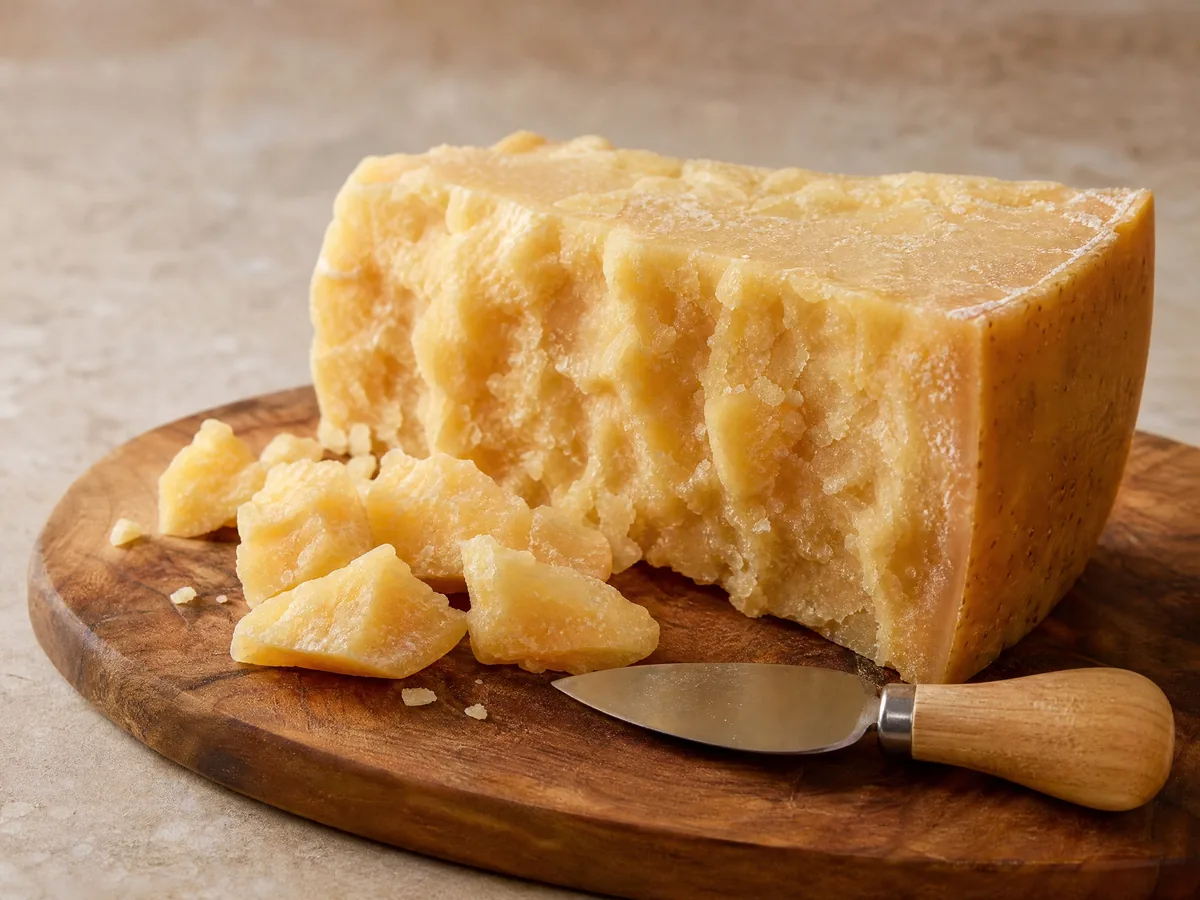
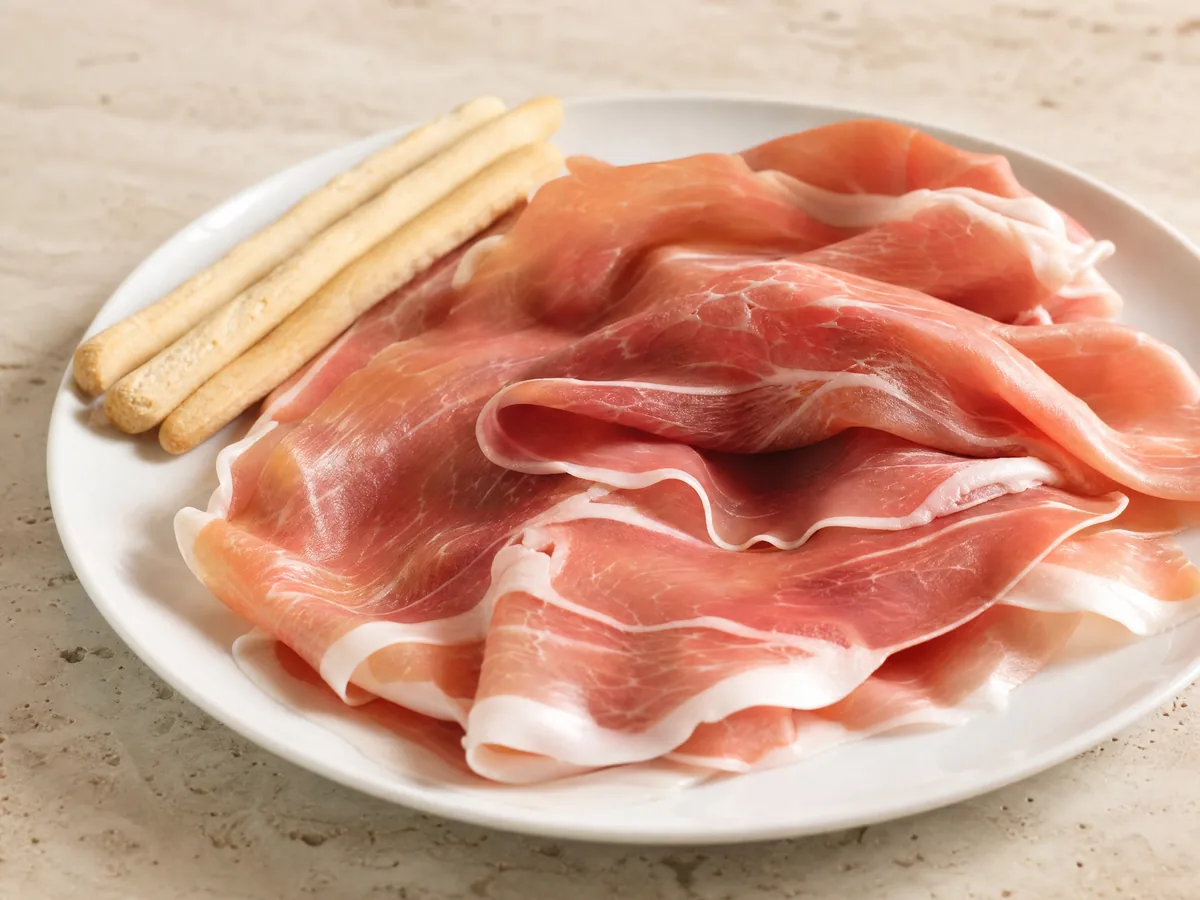
Parma has more of both than almost anywhere. Parmigiano Reggiano and Prosciutto di Parma were among the first names the EU registered, on June 21, 1996. This page explains the labels, then shows you what to look for on a rind, a ham and a menu, and what changes once you leave the EU.
At a glance
- DOP (PDO)
- Every production stage happens in the defined area. The EU logo is mandatory on the food label.
- IGP (PGI)
- At least one production stage happens in the area. Logo also mandatory on food.
- STG (TSG)
- A traditional recipe or method, with no link to a place.
- Parma's DOPs
- Parmigiano Reggiano and Prosciutto di Parma (June 21, 1996), Culatello di Zibello (July 2, 1996).
- Parma's IGPs
- Fungo di Borgotaro (1996), Coppa di Parma (2011), Salame Felino (2013).
- Italy in the register
- 898 registered names on September 29, 2026, of which 331 are foods (174 DOP, 157 IGP).
- The law
- Regulation (EU) 2024/1143, in force since May 13, 2024, covers food, wine and spirits.
In this guide
The three EU labels, in plain words
The European Commission defines them like this:
- DOP / PDO: the strongest link to place. All stages of production happen in the named area. For wine, the grapes must come only from that area.
- IGP / PGI: a quality or reputation essentially due to the area, with at least one stage of production there. For wine, at least 85% of the grapes.
- STG / TSG: a traditional composition or method, not tied to a place.
On food, the red-and-yellow DOP logo or the blue-and-yellow IGP logo is compulsory. On wine it is optional, and Italy uses its own terms instead: DOC and DOCG are Italian names for PDO wines. The local Colli di Parma wine is in the EU register as a PDO and appears on labels as DOC.
Since May 13, 2024 all three product types sit under one law, Regulation (EU) 2024/1143. The official register is called eAmbrosia; anyone can search it. When we downloaded it on September 29, 2026 it listed 3,739 registered names across the EU, 898 of them Italian.
Parma's protected foods at a glance
| Product | Mark | Registered | Key rule |
|---|---|---|---|
| Parmigiano Reggiano | DOP | 1996 | Milk, salt and rennet only; at least 12 months |
| Prosciutto di Parma | DOP | 1996 | Pork and sea salt only; at least 14 months |
| Culatello di Zibello | DOP | 1996 | Cured in a bladder, tied by hand; at least 10 months |
| Salame Felino | IGP | 2013 | Made anywhere in the province of Parma |
| Coppa di Parma | IGP | 2011 | Cured pork neck |
| Aceto Balsamico Tradizionale (Modena, Reggio Emilia) | DOP | 2000 | At least 12 years in the barrel |
Two changes older guides miss. The Prosciutto di Parma consortium raised the minimum from 12 to 14 months in its specification of May 17, 2025. And the Parmigiano Reggiano museum left Soragna for Fontevivo in June 2026; our Food Museums page has the new address.
Reading a Parmigiano Reggiano rind
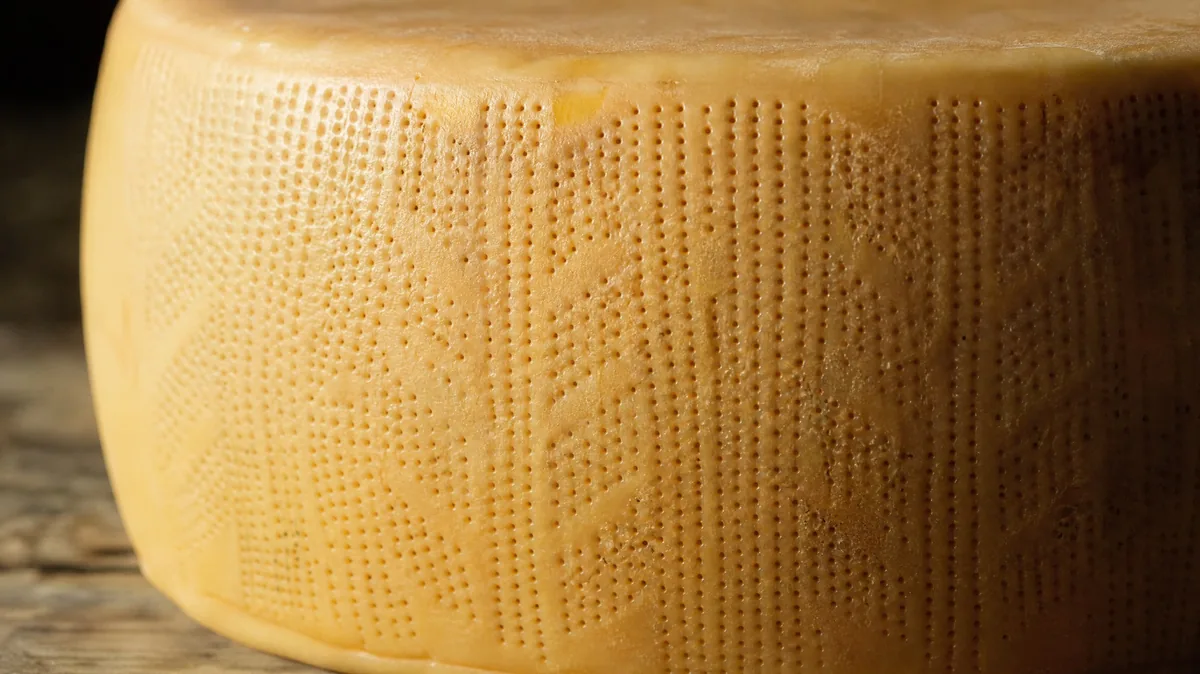
A whole wheel tells you its own history. The consortium lists these marks:
- Pin dots around the side spelling PARMIGIANO-REGGIANO, with the dairy's number and the month and year of production.
- A casein plate set into the rind with the letters CFPR, a unique code and a Datamatrix code.
- At 12 months, experts inspect each wheel by eye and with a percussion hammer. Those that pass get an oval fire brand reading Consorzio Tutela Parmigiano-Reggiano with the year.
- Wheels with minor defects are sold as mezzano and have parallel lines cut into the rind.
- Wheels that fail have every mark of origin removed and cannot be sold under the name.
At a counter, ask for a piece that shows some of the dots. Pre-packed wedges must state the minimum age on the label. The age changes the price: at the Ugolotti dairy shop in September 2026, a kilo cost €19.90 at 12 months and €25.90 at 36 months.
The ducal crown on Prosciutto di Parma
The ham's paper trail starts on the farm. The specification in force since May 2025 requires:
- A tattoo on both hind legs of the piglet within 28 days of birth, with the province, a letter for the birth month and the farm's code.
- A PP stamp from the slaughterhouse.
- A circular seal applied at the start of salting, with the month, the year and the letters C.P.P.
- After at least 14 months and an inspection, the ducal crown: a fire brand of a five-point crown on an oval base with the word PARMA, and the producer's code of one letter and two numbers underneath.
The consortium owns the branding irons and hands them to inspectors only for branding. The specification is blunt about why: without the crown, a ham cannot be sold as Prosciutto di Parma, and counterfeit crowns have been found on ordinary hams. A boned ham must still show the crown. Pre-sliced packs carry a black triangle with a gold crown in the top left corner.
To see the process, a prosciutto house visit in Langhirano shows the salting rooms and the branding.
Parmesan, reggiano and balsamic outside the EU
Inside the EU, only Parmigiano Reggiano can be sold as Parmesan. The EU Court of Justice dealt with the word in case C-132/05, decided on February 26, 2008, and treated it as an evocation of the protected name.
Outside the EU the names are not protected in the same way. In the United States, the federal standard for "Parmesan cheese, reggiano cheese" (21 CFR 133.165) requires curing of not less than 10 months, two months short of the DOP minimum, and no link to Italy. A US wedge labeled reggiano is not necessarily Parmigiano Reggiano; look for the pin dots on the rind.
Balsamic is the other trap. Aceto Balsamico Tradizionale di Modena DOP is aged at least 12 years and sold in a 100 ml bottle designed by Giugiaro in 1987. Aceto Balsamico di Modena IGP is a separate, cheaper product with its own rules. See our balsamic tasting page.
Finally, carrying food home. US rules allow solid cheese but ban Italian prosciutto and salami even vacuum-packed. Great Britain allows no EU cheese or pork products in personal luggage. Our buying guide has the official wording.
Tickets and tours you can book
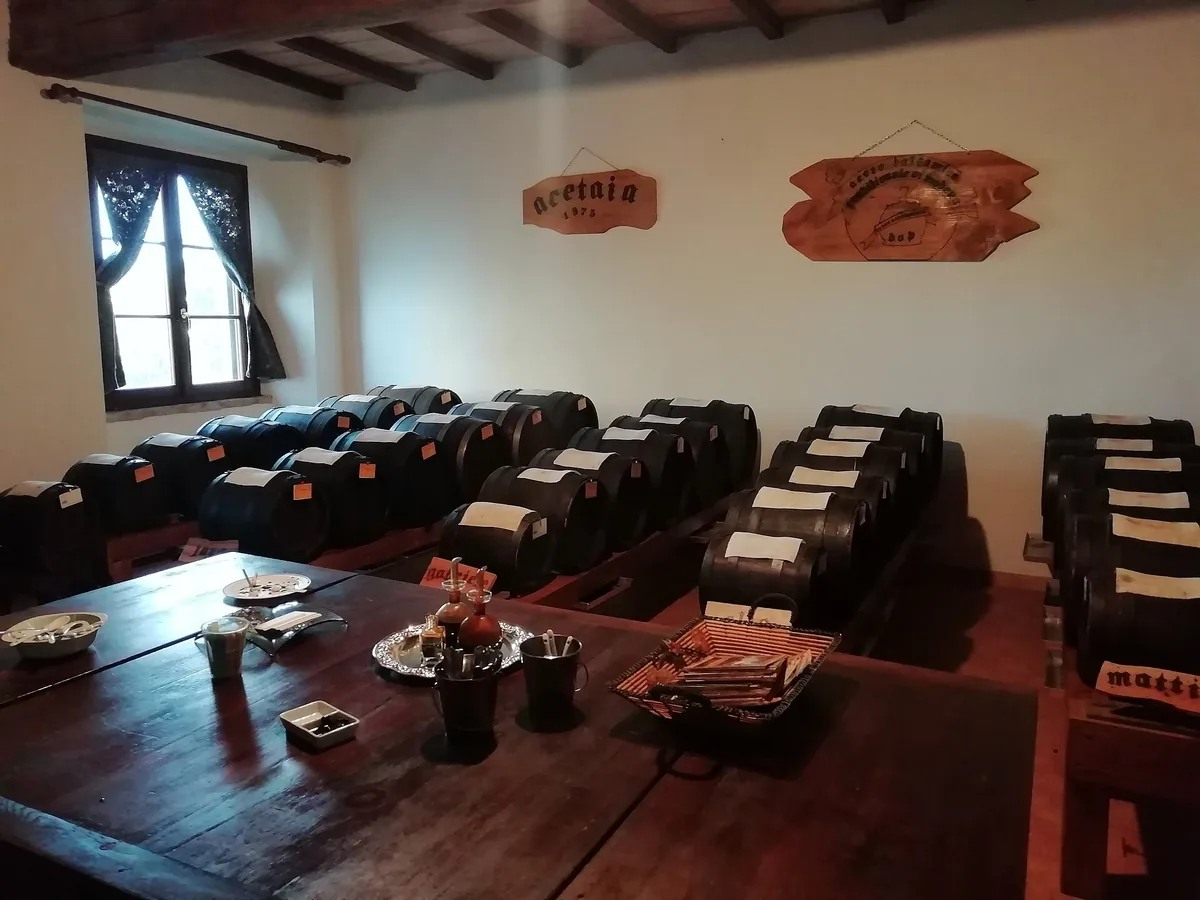
Cavedoni Balsamic Vinegar Tour: The Oldest in Modena
Same €75 as the acetaia's own 'Visita Gourmet'; its plain tasting visit is €35 direct. It is 25 km from Modena; no transport.
Rating as shown on Viator
Parmigiano & Balsamic Artisans: In-Depth Private Tour and Tasting
Starts 7:30 a.m. (self-drive meets at San Prospero). Transport option covers pickup within 15 km of Piazza Garibaldi. Not for vegetarians.
Rating as shown on Viator
Balsamic Vinegar, Wine Tasting & Tour near Parma & Reggio
You drive there yourself (about 25 minutes from Parma, per the listing). This is Reggio Emilia's DOP, not Modena's. 15 reviews.
Rating as shown on GetYourGuide
Booking through these links supports this site at no cost to you. Prices move by date, so we do not print them here; the official prices we checked are in the page above.
Frequently asked questions
What does DOP mean on Italian food?
Denominazione di Origine Protetta, the Italian form of the EU's Protected Designation of Origin (PDO). Every stage of production must happen in the named area, to a registered specification, and the EU logo is compulsory on the label.
Is Parmesan the same as Parmigiano Reggiano?
In the EU, yes: the name Parmesan is reserved for Parmigiano Reggiano. In the US, no: "Parmesan" is a federal cheese standard that needs 10 months of curing and can be made anywhere. Only the DOP cheese has the pin-dot rind and the oval fire brand.
How can I tell real Prosciutto di Parma?
Look for the ducal crown: a five-point crown on an oval with the word PARMA, fire-branded on the ham after at least 14 months. Pre-sliced packs show a gold crown in a black triangle in the top corner.
Is all culatello a DOP product?
No. Only Culatello di Zibello is the DOP, aged at least 10 months. Since 2017, plain "culatello" can be sold without the DOP if it is aged at least 9 months and tied.
Can I bring Parmigiano Reggiano and prosciutto home?
To the US, hard cheese yes, prosciutto and salami no, per USDA rules updated January 13, 2026. To Great Britain, neither. Declare all food on arrival.
Further reading
Official sources
- European Commission - Geographical indications and quality schemes explained (official) – PDO, PGI and TSG definitions, logo rules, Regulation (EU) 2024/1143 in force May 13, 2024. Checked September 29, 2026
- European Commission - eAmbrosia GI register, public API (official) – Full register downloaded September 29, 2026: registration dates for Parma names; 3,739 registered EU names, 898 Italian, 174 Italian DOP foods and 157 IGP foods
- Consorzio del Parmigiano Reggiano - FAQ (official) – Pin dots, casein plate, 12-month inspection, oval fire brand, mezzano lines, removal of marks, minimum age on pre-packs
- Consorzio del Prosciutto di Parma - Disciplinare of May 17, 2025 (official PDF) – 14-month minimum, piglet tattoo, PP stamp, C.P.P. seal, five-point ducal crown, counterfeit crowns, sliced-pack triangle
- Consorzio di Tutela del Culatello di Zibello (official) – Founded January 8, 2009; 20 producers; 10-month minimum; generic culatello rules since June 28, 2017 (per our food facts file)
- Consorzio Aceto Balsamico Tradizionale di Modena (official) – At least 12 years; 100 ml Giugiaro bottle of 1987
- US eCFR - 21 CFR 133.165 Parmesan and reggiano cheese – Cured not less than 10 months
- Court of Justice of the EU - Case C-132/05, Commission v Germany – Judgment of February 26, 2008 on the use of Parmesan
- Caseificio Ugolotti - online shop – Parmigiano per kg: €19.90 at 12 months, €25.90 at 36 months, September 29, 2026
- USDA APHIS and GOV.UK - bringing food home (official) – US ban on Italian prosciutto and salami (updated January 13, 2026); GB ban on EU dairy and pork in luggage (gov.uk/bringing-food-into-great-britain)